















The Cleveland Browns executed one of the most unexpected moves of the offseason on Monday, reaching an agreement to trade superstar edge rusher Myles Garrett to the Los Angeles Rams. The decision to part ways with Garrett comes as a shock, particularly following his record-breaking 2025 campaign in which he registered an unprecedented 23 sacks.
To justify moving a generational talent, the Browns required a substantial haul, and the confirmed return reflects that necessity. In exchange for Garrett, Cleveland acquired defensive end Jared Verse along with three future draft assets:
- A 2027 first-round selection
- A 2028 second-round selection
- A 2029 conditional third-round selection
While the deal currently guarantees one first-round pick, a specific and unusual stipulation in the contract could potentially upgrade the 2029 selection into a second first-round pick for the Browns.
The Strategic Provision That Could Net Cleveland an Additional First-Rounder
The 2029 draft pick is the centerpiece of a complex conditional agreement. Cleveland’s front office sought to protect the franchise from the nightmare scenario of Garrett eventually landing with a divisional rival. To prevent this, they inserted a “poison pill” clause into the trade terms.
The condition is straightforward: If the Rams trade Garrett to any AFC North team—the Pittsburgh Steelers, Baltimore Ravens, or Cincinnati Bengals—at any point before the 2029 NFL Draft, the compensation owed to Cleveland automatically upgrades. Instead of receiving a third-round pick in 2029, the Browns would receive the Rams’ first-round pick for that year.
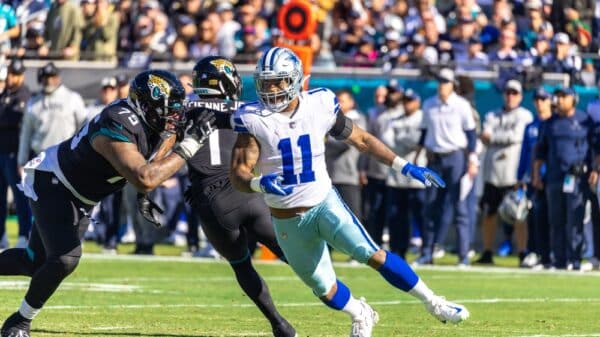
This specialized contingency, while rare, has been seen in the league before. The Dallas Cowboys utilized a nearly identical framework when they traded Micah Parsons to the Green Bay Packers. In that deal, Dallas secured a future first-round pick as insurance in case the Packers decided to ship Parsons back to an NFC East opponent.
For the Browns, this precaution is a reaction to the Rams’ aggressive and fluid roster management style. In 2019, Rams GM Les Snead famously traded two first-rounders for Jalen Ramsey. Although Ramsey was a vital part of their 2021 Super Bowl run and earned multiple Pro Bowl nods in Los Angeles, the team eventually traded him to the Miami Dolphins following the 2022 season.
While the Dolphins are not divisional rivals of the Jaguars, the Ramsey situation proved that the Rams are willing to move elite stars shortly after acquiring them. By including this clause, the Browns have ensured that Snead and the Rams will face a massive penalty if they attempt to facilitate Garrett’s return to the AFC North.
Garrett is currently 30 years old and remains under contract through the 2030 season. While he is expected to be a cornerstone of the Rams’ defense for the foreseeable future, this unique trade language ensures that Cleveland is compensated heavily if he ever ends up on a rival’s sideline.
Summary of the Blockbuster Garrett Trade and Its Long-Term Implications
The trade of Myles Garrett marks a seismic shift for the Cleveland Browns, balancing the loss of the league’s most productive pass rusher with a significant influx of draft capital and young talent like Jared Verse. By meticulously crafting a conditional clause for the 2029 draft, the Browns have effectively devalued Garrett as a trade asset for their AFC North competitors. This move not only provides Cleveland with the resources to rebuild but also serves as a strategic defensive maneuver to keep their former captain from haunting them within the division for years to come.