










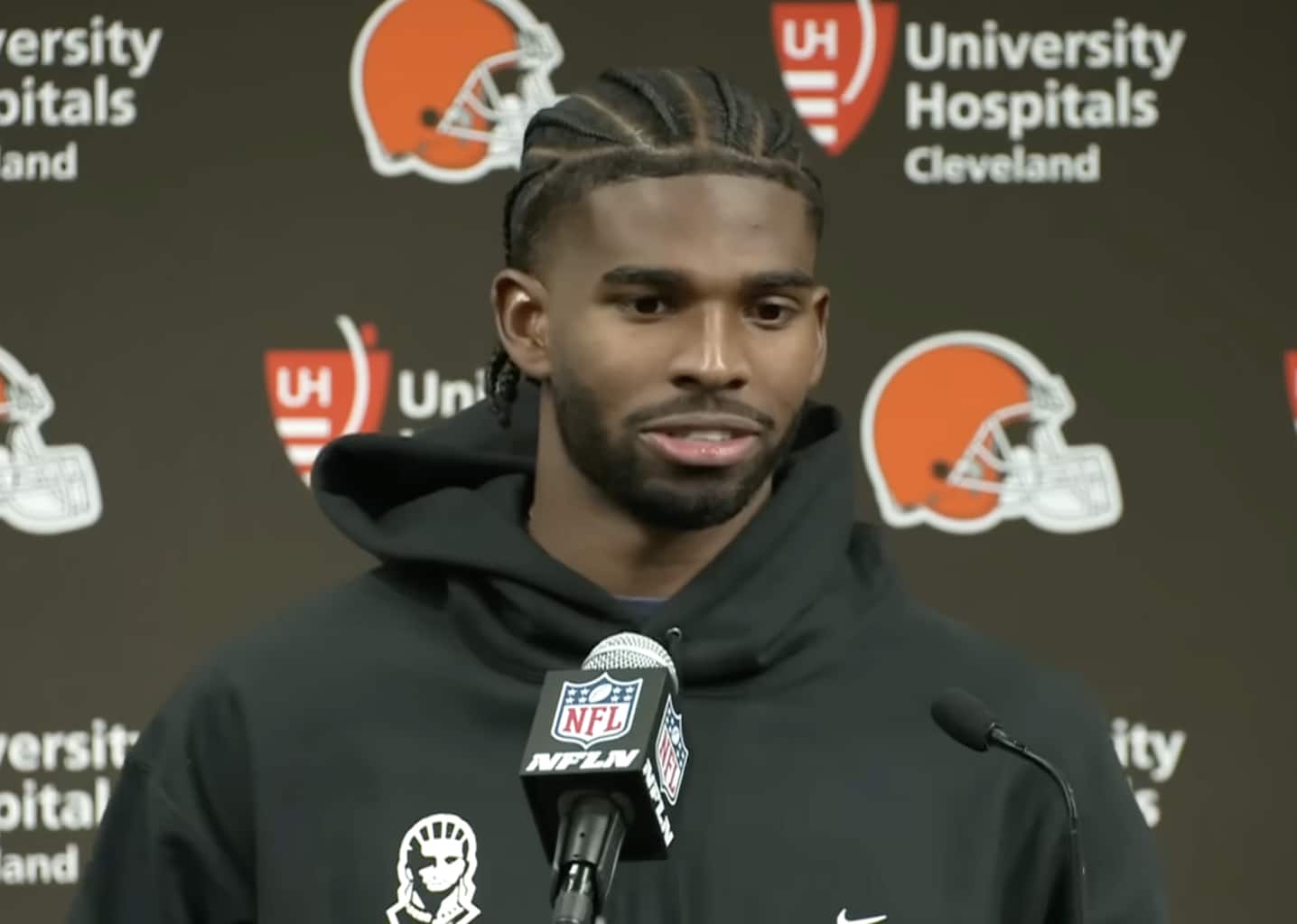
Cleveland Browns quarterback Shedeur Sanders turned his debut NFL season into a commercial masterclass, leveraging his massive personal brand to generate unprecedented revenue through jersey sales, collectibles, and licensing deals. According to the latest annual report from the NFL Players Association, Sanders earned a staggering $17.7 million in group licensing income during his rookie campaign. This total didn’t just lead the league; it completely reset the record books, nearly doubling the previous single-season high of $9.5 million set by Tom Brady during his tenure with the Tampa Bay Buccaneers.
The scale of Sanders’ marketing power is even more striking when compared to traditional coaching and player salaries. His licensing earnings outpaced his father Deion Sanders’ projected 2026 coaching salary at the University of Colorado by 170%. Furthermore, the off-field windfall significantly exceeds his actual rookie playing contract, which is valued at approximately $4.6 million over four years. This indicates that Sanders has successfully transitioned his collegiate “Buffaloes” fame into a professional business model that functions independently of his draft position.
The financial trail highlights a loyal consumer base that followed him from the Big 12 to the pros. These earnings were funneled through his LLC, SS2 Legendary LLC, via 13 separate payments between May 2025 and February 2026. A massive $9.2 million portion of that total was secured just days after the 2025 NFL Draft, signaling immediate retail demand. With Sanders recently switching his jersey from No. 12 to No. 2, the market for his apparel is expected to see another surge as fans look to update their gear.
Evaluating the Browns’ Quarterback Battle and Sanders’ Development
While his business ventures are flourishing, Sanders is currently locked in a high-stakes competition for the starting role in Cleveland. Despite being a fifth-round selection and navigating what his father described as a “hellish” entry into the league, he is currently vying for snaps against veteran Deshaun Watson. New Browns offensive coordinator Todd Monken has characterized the situation as a genuine open competition.
Sanders’ rookie statistics reflect the typical growing pains of a young signal-caller behind a struggling offensive line. In his first year, he completed 57% of his passes for 1,400 yards, recording seven touchdowns against 10 interceptions. He added 169 yards and a score on the ground but was sacked 23 times, leading to a passer rating near the bottom of the league. Sanders moved into the starting lineup for the final seven games of the year following a season-ending injury to fellow rookie Dillon Gabriel.
Despite the statistical hurdles, the Browns’ coaching staff remains optimistic about his ceiling. Monken noted that Sanders possesses “elite playmaking ability,” a trait that was evident on his college film and in flashes during his rookie season. The coach emphasized that while Sanders has significant room for growth, his raw talent is undeniable and provides a strong foundation for the upcoming season.
For his part, Sanders seems to be thriving under the new leadership. He recently praised the coaching staff for their person-centered approach and the high-intensity environment they have established in the weight room and on the field. As the Browns head into the next phase of the offseason, the focus remains on whether Sanders can translate his massive commercial appeal into consistent winning performance on the gridiron.
Ultimately, Shedeur Sanders has proven to be a unique force in the modern NFL era, merging high-level brand influence with a developing professional career. While his record-breaking licensing numbers establish him as one of the league’s most marketable stars, his second year will be defined by his ability to beat out veteran competition and stabilize a Browns offense looking for a long-term solution at quarterback.