










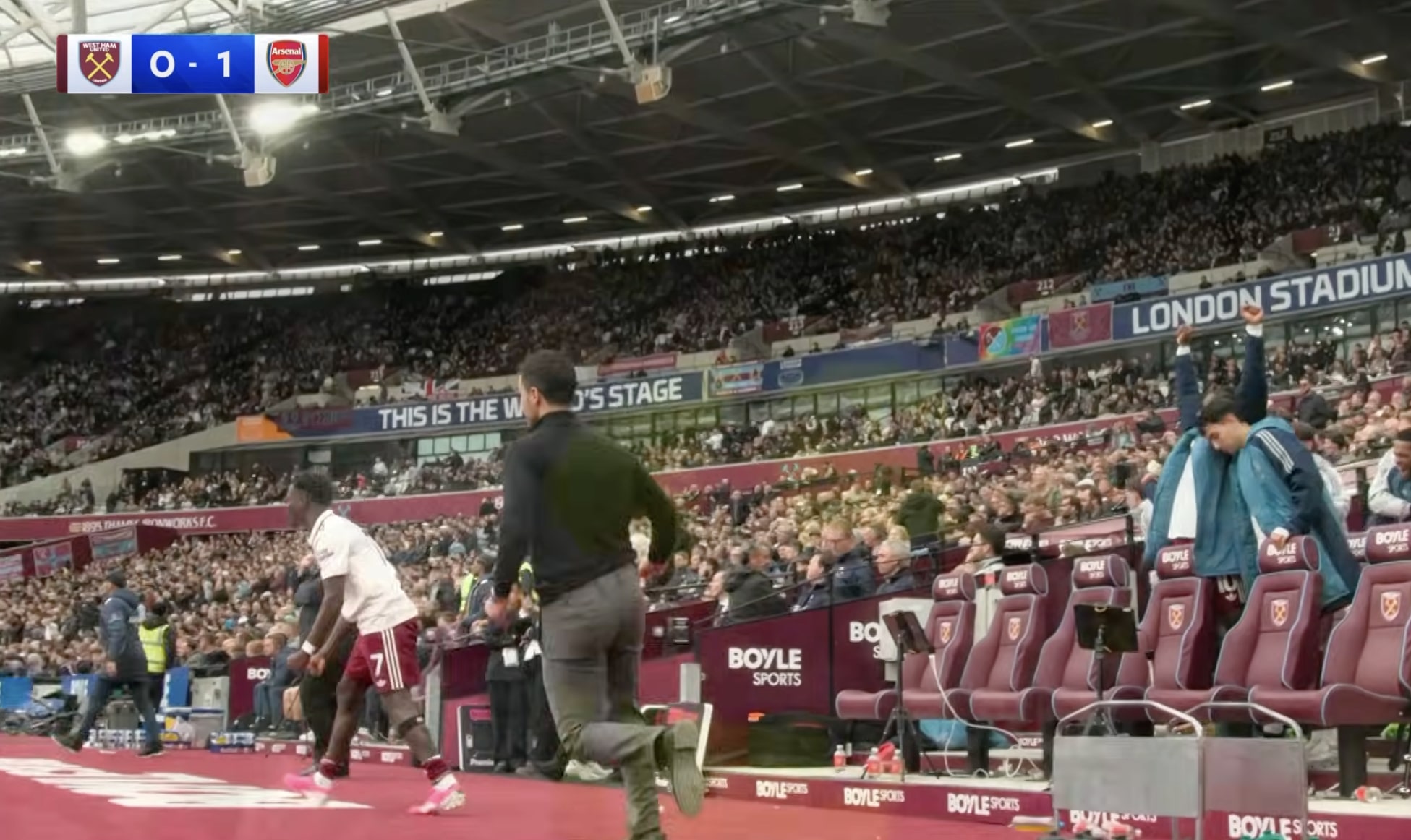

Arsenal narrowly avoided a catastrophic blow to their title aspirations in East London, securing a victory that was as much about surviving their own mistakes as it was about the final score. In a match defined by late-game tension and a marathon VAR intervention, the Gunners managed to escape with three points after Callum Wilson’s potential equalizer was controversially overturned. The decision, which followed a lengthy review of an alleged foul on David Raya by West Ham’s Pablo, may well be remembered as a season-defining moment for Mikel Arteta’s side.
Arsenal Escape Late Drama Following Disallowed Goal
For a few frantic minutes at the London Stadium, it appeared Arsenal had surrendered two vital points. A chaotic corner saw the ball slip through David Raya’s grasp, eventually falling for Callum Wilson to strike home. However, after a four-minute review involving seventeen different replays, the officials determined that Pablo’s arm had impeded Raya’s ability to defend the cross. While the decision left West Ham supporters fuming and their manager, Nuno Espirito Santo, questioning the consistency of officiating, Mikel Arteta was quick to praise the clarity provided by the VAR team under immense pressure.
Arteta’s relief was palpable. He noted that while he has been a vocal critic of officiating in the past, the ability of the VAR room to provide the referee with a clear view of the infraction—away from the “lights and chaos” of the pitch—was essential. For West Ham, the decision was a bitter pill to swallow, further complicating their desperate fight for Premier League survival and leaving them in a precarious position with only two matches remaining.
The Impact of Injuries and Tactical Reshuffling
The match was also a test of Arsenal’s depth and Arteta’s tactical flexibility, though the results were mixed. Early injuries to Ben White and Riccardo Calafiori forced a series of unconventional adjustments. The decision to move Declan Rice, arguably the league’s premier midfielder, to right-back was a gamble that nearly backfired. The shift disrupted Arsenal’s midfield control, allowing West Ham to find space on the flanks and create several dangerous opportunities, including a strike from Crysencio Summerville that flashed just wide.
The introduction of Martin Zubimendi was similarly short-lived. Despite needing control, Arteta opted to substitute Zubimendi off after just 39 minutes to bring on more attacking flair. While the manager defended the move as a necessary risk to create “issues and threats” for the opposition, it highlighted a team struggling to find its usual rhythm amidst a mounting injury list.
Evolving Tactics in the Dead-Ball Era
There is a poetic irony in the way the match concluded. Arsenal have spent the last several seasons revolutionizing set-piece tactics, often using players like Ben White to subtly obstruct opposition goalkeepers. At the London Stadium, West Ham attempted to use a version of this very template against the Gunners. The sheer volume of players crowded into the six-yard box—often referred to as a “meat wall”—has become the standard for deciding high-stakes matches at both ends of the table.
While Arsenal have recently moved away from the more blatant goalkeeper-blocking tactics that drew scrutiny in Europe, the match proved that the “dark arts” of the corner kick remain central to the Premier League’s tactical landscape. West Ham’s error was perhaps being too aggressive in their execution, applying just enough extra pressure on Raya to trigger the intervention of the VAR monitor.
Odegaard’s Leadership Breaks the Deadlock
When tactical systems falter, individual brilliance often takes over. Martin Odegaard, despite lingering questions about his match fitness, proved why he is the heartbeat of this Arsenal side. As the game entered its final stages, the captain took control of the tempo. His vision was eventually the difference-maker; drawing in three defenders before threading a perfectly timed pass to Leandro Trossard, who finished with clinical precision.
The goal forced Arsenal into a defensive shell. In the final minutes, the Gunners effectively abandoned their attacking philosophy, completing only a handful of passes as they dropped into a deep low block. It was a “win at all costs” approach that prioritized survival over style—a trait often associated with champions, even if it lacked the aesthetic dominance usually expected from an Arteta team.
Takeaway: Winning Ugly in a High-Stakes Title Race
With only two league fixtures remaining, Arsenal have reached the stage of the season where the quality of the performance is secondary to the result. This victory was far from perfect; it was marred by tactical confusion, defensive lapses, and a reliance on a favorable VAR ruling. However, in a title race where the margins are razor-thin, the ability to “get away with one” can be the difference between a trophy and a runner-up finish. For West Ham, the focus shifts to a must-win scenario in their final outings, while Arsenal move forward, battle-scarred but still firmly in the hunt for the crown.